

eDeclaration in the EU: “As few information requests as possible!”
Date
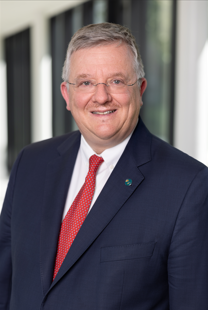
Frankfurt, 22 June 2026 – Commenting on the trilogue between the EU institutions on the subject of ‘eDeclaration’, scheduled for tomorrow, VDMA Executive Director Thilo Brodtmann says:
• “The eDeclaration could be a first step towards reducing red tape in the area of the posting of workers, as it is intended to enable notifications regarding the posting of workers to be submitted via a single, EU-wide portal”.
• “We call on the EU institutions not to render the eDeclaration impractical during the trilogue negotiations by adding further information requirements. The standard eDeclaration form will only represent a genuine simplification if it is limited to the essentials; that is, if it contains as few information requirements as possible. Participating Member States should also not be permitted to request any additional information not already provided for in the eDeclaration.”
• “To date, the 27 EU Member States have introduced a wide variety of reporting requirements for employees posted abroad. Small and medium-sized enterprises in particular can only cope with this patchwork of national regulations by deploying additional staff or by engaging external service providers, which incurs additional costs. This results in additional costs and red tape for European machinery manufacturing companies, which are heavily dependent on the EU Single Market.”
The VDMA represents 3500 German and European mechanical and plant engineering companies. The industry stands for innovation, export orientation and SMEs. The companies employ around 3 million people in the EU-27, more than 1.2 million of them in Germany alone. This makes mechanical and plant engineering the largest employer among the capital goods industries, both in the EU-27 and in Germany. In the European Union, it represents a turnover volume of an estimated 900 billion euros. Around 80 percent of the machinery sold in the EU comes from a manufacturing plant in the domestic market.